
Environmental, Social & Governance Management System
Operational records in. Framework-mapped disclosure out.
One governed platform for EHS, carbon, risk, compliance, supply chain and product stewardship; where every disclosure is mapped to its framework and issued as a controlled, numbered revision from the same records the organisation already runs on.
- 0
- Functional areas
- 0
- Report families
- 0
- Disclosure frameworks
- 0
- User roles
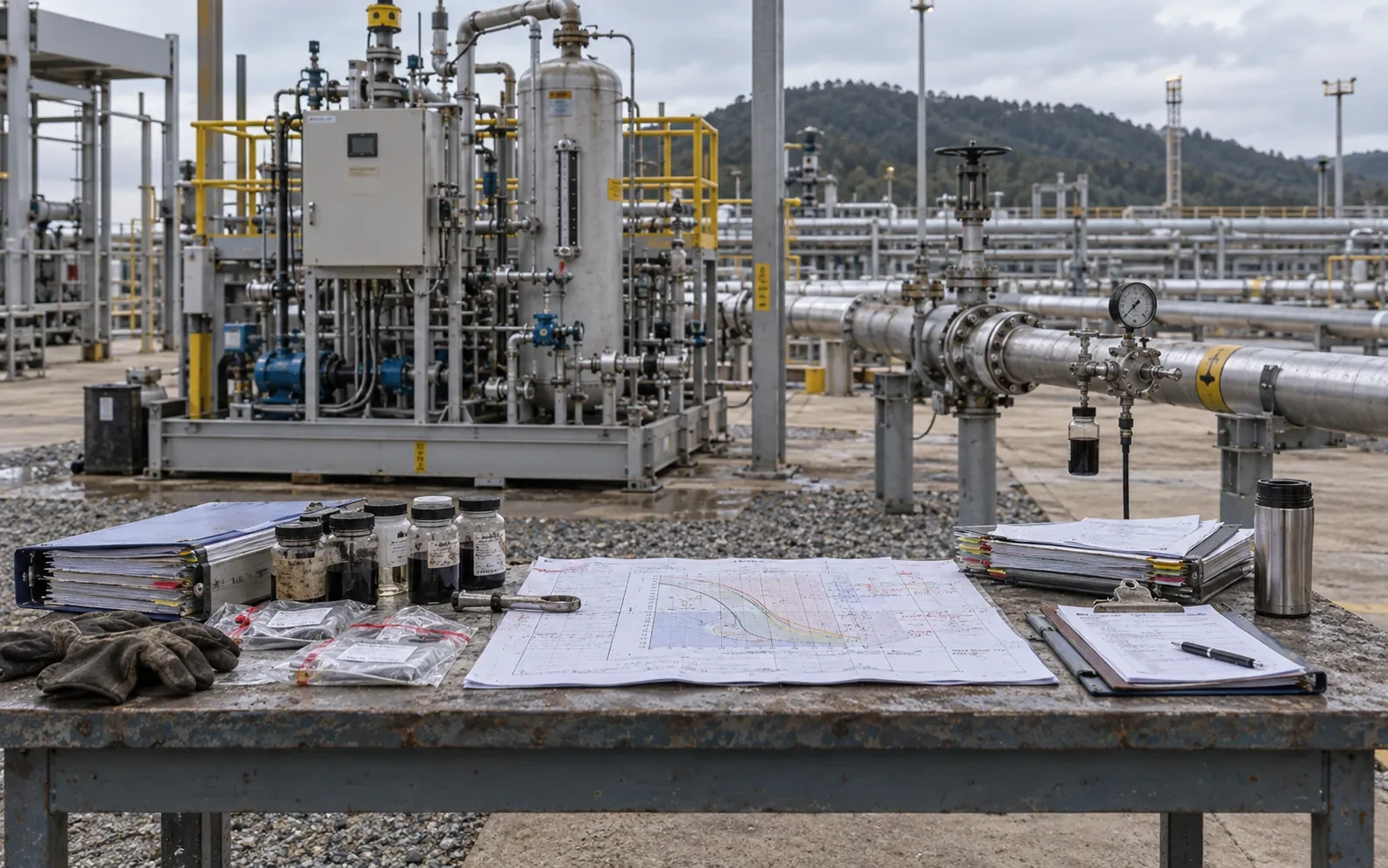
Three sources of truth, one governed answer.
Environmental, social and governance data arrive from different parts of the operation and stay distinguishable the whole way. They meet at governed metrics and framework mapping, and leave as one issued revision.
Twelve functional areas, grouped the way they are bought.
The application's own navigation. Every chip is a page, and an organisation can hold the sustainability core alone or the whole suite.
Every figure traced to the record that produced it.
Emissions carried with their scope split and their period. Incidents, residual risks, obligations and supplier ratings shown with what needs attention first, in the order severity puts them.
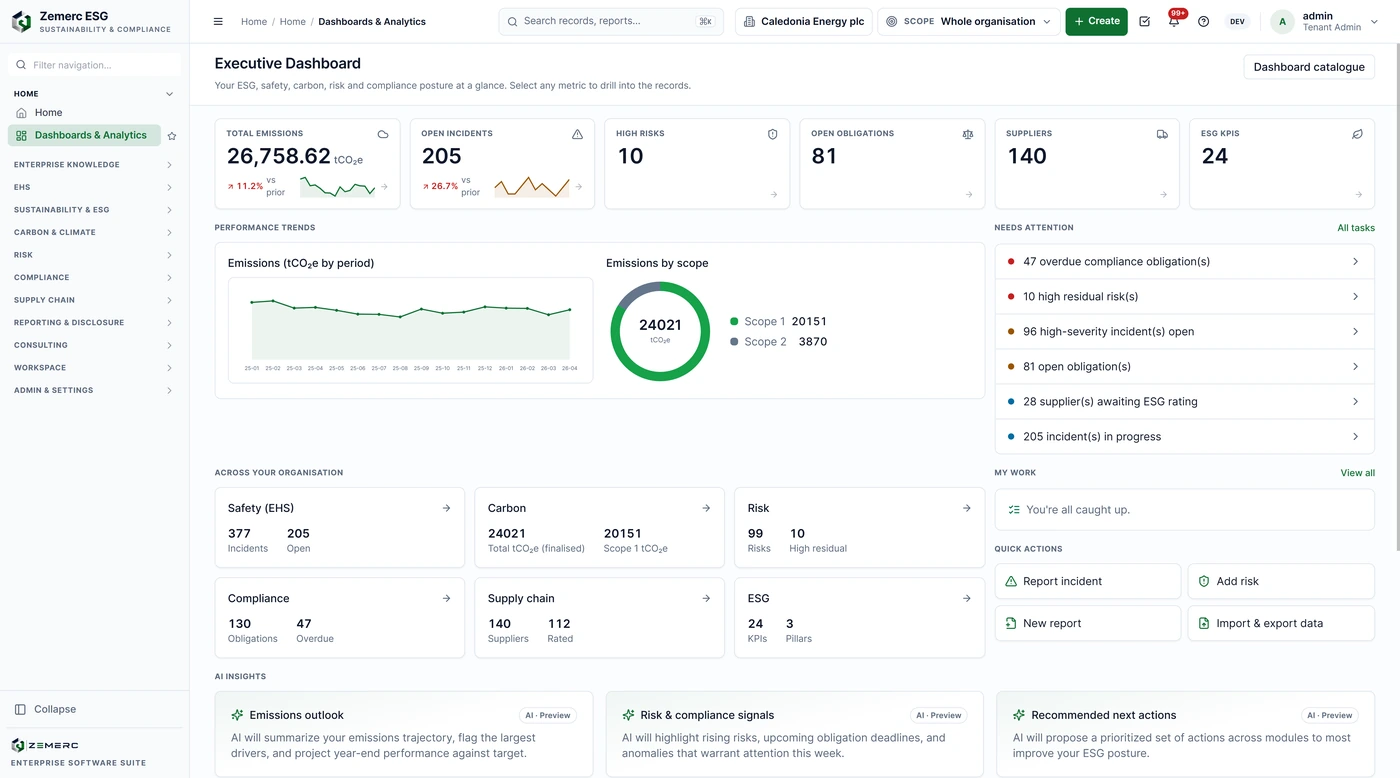
- Scope kept separateScope 1 and Scope 2 are carried as their own inventories by period, never merged into a single number.
- Attention before totalsOverdue obligations, high residual risks and high-severity incidents are listed above the summary, not below it.
- Never colour aloneEvery state carries a word as well as a colour, and the whole application is reachable by keyboard.

The board reads the same numbers the site recorded.
A board pack, an investor report and a framework disclosure are all built from one estate of governed records. There is no separate reporting dataset to reconcile, because the report is assembled from the registers themselves.
- One estate behind the board pack, the framework disclosure and the supplier report
- Report families cover executive, performance, carbon, health and safety, risk, compliance, supply chain and product
- Every issued revision stays in the register when the next one supersedes it
Six steps, and the check comes before the document.
A report cannot be generated over data that has not passed its governance and data-quality evaluation. The preview shows the document as it will be issued, not a summary of it.
Select. Choose a report family from the catalogue; board pack, performance, emissions statement, framework disclosure, supplier or product.
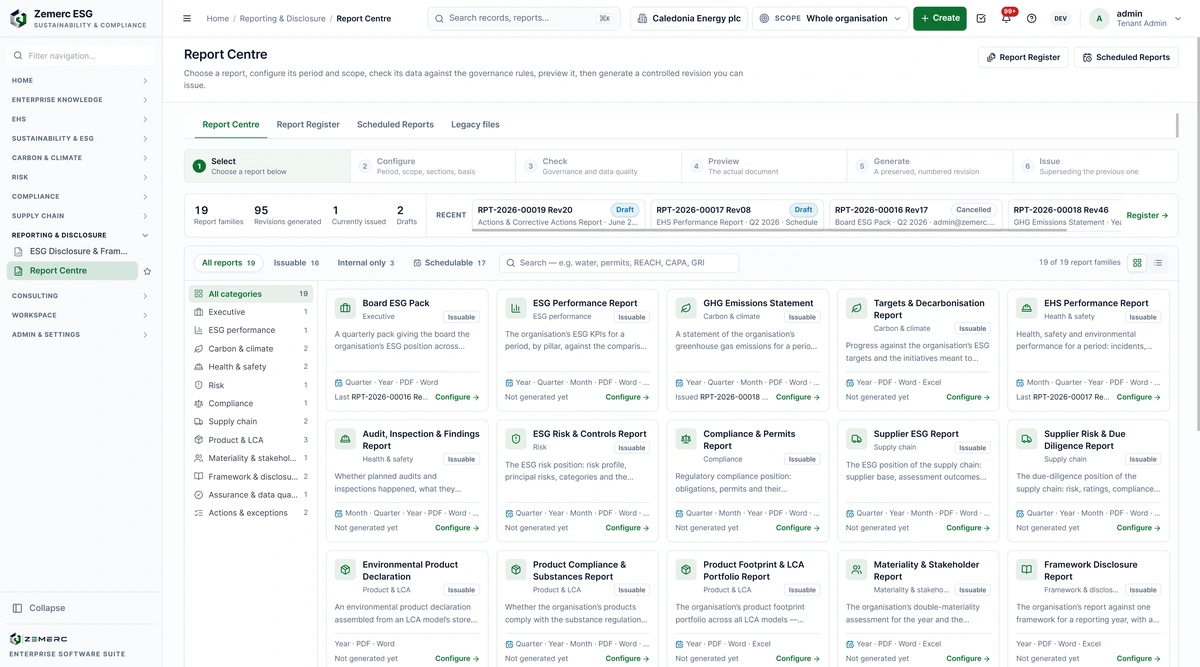
Nineteen report families, from the board pack through to framework disclosure, each with the periods and formats it supports.
Coverage is counted, not asserted.
The governed estate behind every assessment is inventoried: how many objects, of which types, at what confidence, across which jurisdictions.

A crosswalk between frameworks, and a graph of how they relate.
Requirements from different frameworks rarely line up one to one. The crosswalk holds the relationships, the graph makes them navigable, and the dashboard reports how much of each domain is actually covered.
- Regulatory, framework, material-topic, risk, execution and evidence intelligence
- Confidence recorded per object as high, authoritative or medium
- Jurisdiction coverage shown per region rather than claimed globally
What holds the estate together beneath every module.
Every dataset declares what may be done to it.
Import, export, round-trip, bulk update, historical migration and extract are capabilities of a record type, not a blanket permission. The catalogue states which operations each type supports and what it takes to run them.
- Jobs are previewed before anything is written
- A rejected row is returned with its reason, not silently dropped
- Every applied change keeps the job it came from
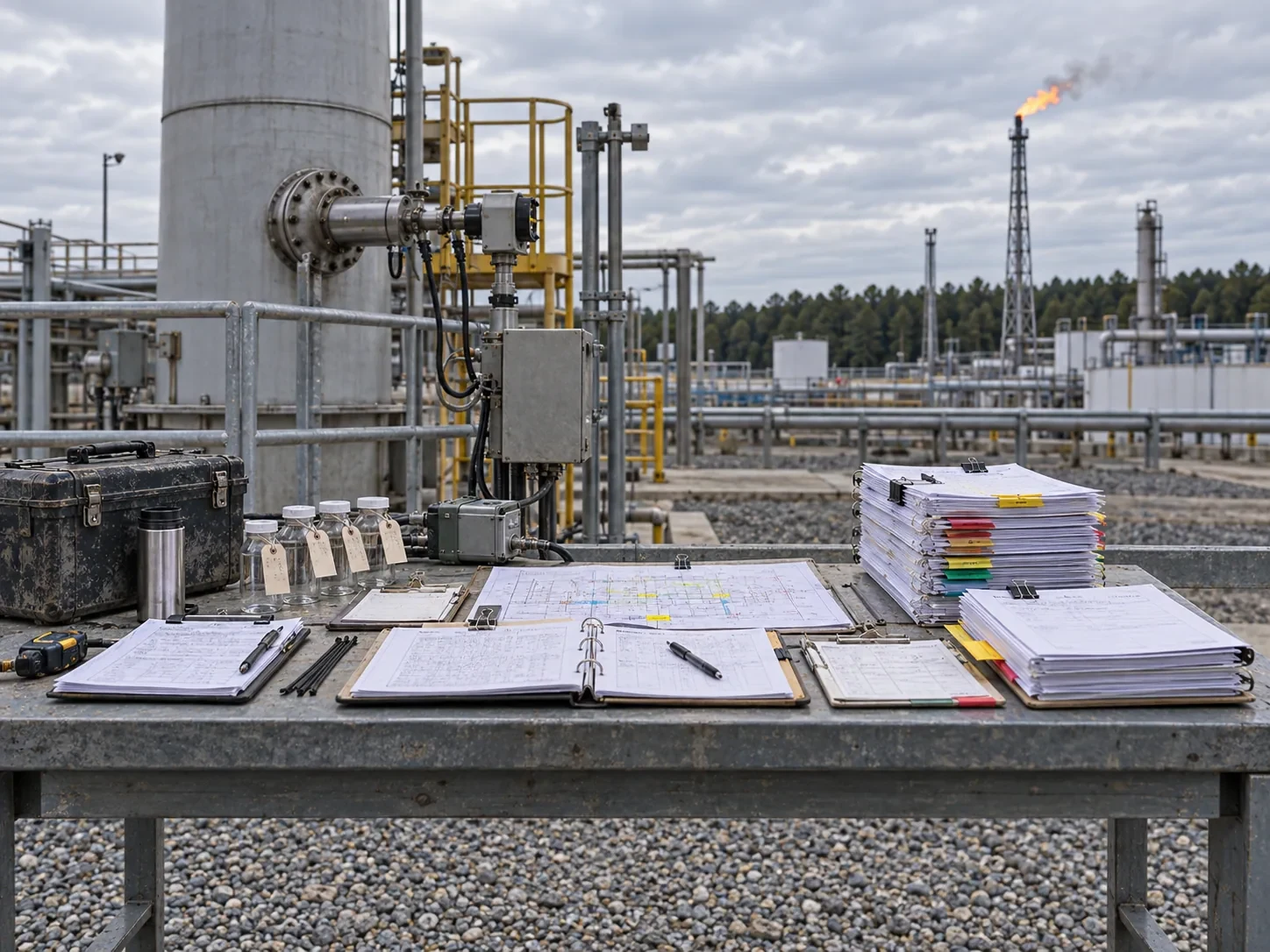
Tenant isolation in the database
Organisations are separated by row-level security in Postgres, not by a filter in the application, so one organisation cannot read another through any route.
Licensed by module
Entitlements decide which functional areas an organisation holds, so the application can be taken as its sustainability core or as the full suite.
Deterministic intelligence
Knowledge, document assembly, assessment and compliance engines produce their answers from the governed estate and cite the objects they used. Coverage is a count, not a claim.
Revisions that supersede
Every issued report is a numbered revision. Superseding does not delete: the register keeps what was previously issued.
More of what the application covers.
- Life cycle assessment, impacts and environmental product declarations
- Contractor management and competencies
- Management of change
- Supplier portal for assessments and ratings
- Scheduled reports with their own register
- Governed import, export, bulk update and historical migration
- Consulting programme workspace and implementation timeline
- Sustainability programmes and stakeholder mapping
Disclosure beside the systems that produce the evidence.
- RMSRMS: Risk Management SystemEnterprise risk, bow-ties and control effectiveness; sustainability risk is reported through ESG.
- HSEHSE: Health, Safety & Environment Management SystemOccupational and operational safety as the system of record; ESG carries the disclosure of it.
- IMSIMS: Integrated Management SystemThe management system itself; ESG audits and obligations reference its clauses.
- EDMSEDMS: Enterprise Document Management SystemControlled documents and transmittals behind the evidence an ESG disclosure rests on.
See ESG build one of your reporting periods.
Bring one period of activity data and one framework you report against. We will show the inventory it produces, the disclosure it maps to and the controlled revision it issues.