
Procurement Management System
A sealed bid stays sealed. There is no emergency read path.
Source-to-pay procurement for capital projects, from supplier registration and qualification through category strategy, sourcing, sealed tendering, award, purchase order, expediting, inspection and payment, with commercial status preserved throughout the chain.
- 0
- Module groups
- 0
- Procurement pages
- 0
- Supplier lifecycle states
- 0
- Performance areas

The question every bidder asks before they price the work.
Sealed tendering is effective only when no user, including an administrator, can bypass the control. PMS protects submissions through layered access and workflow controls so tender confidentiality is preserved until the authorised opening point.
No emergency read path
There is no support route, no administrative override and no back door to a sealed submission. A bid that could be read early by somebody is not a sealed bid.
Opening is an act
Opening happens once, deliberately, and is recorded. It is not a page that becomes available when a date passes and somebody happens to navigate to it.
One identity, isolated relationships
A supplier has one global identity across the platform and a separate relationship with each customer. No customer can see another’s qualification, scoring or standing.
Six states, and the machine permits the transition or refuses it.
A supplier can exist in the register before it becomes eligible for purchasing. Each transition between supplier states is governed, records who made the change and why, and retains any conditions attached to approval.
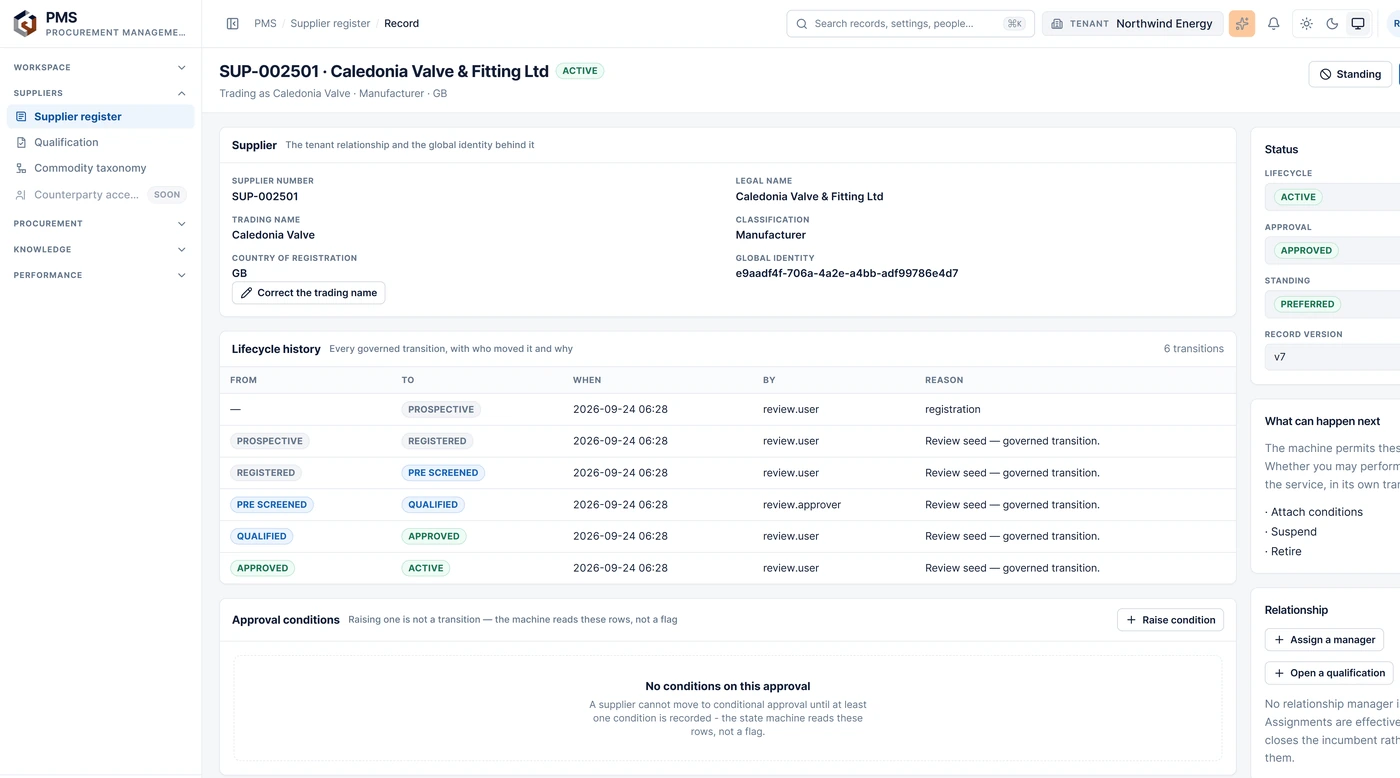
The record carries the tenant relationship and the global identity behind it, so the same supplier is recognisable across engagements without sharing anything between them.
- Standing is separate from approvalLifecycle, approval and standing are three fields, because a supplier can be active, approved and no longer preferred.
- Every supplier-state transitionRecords who made the change, when it occurred and the reason for it, including transitions that may later require explanation or audit.
- Visible because permittedA row appears because row-level security admitted it, not because a filter happened to select it.
From a demand nobody has priced to a payment somebody authorised.
Planning, sourcing, tendering, award, purchase order, expediting, inspection and payment operate as one controlled chain, with the commercial position carried forward through each stage rather than reconstructed afterwards.
Demand. What the project needs, consolidated into packages with long-lead items identified early enough to matter.
Six module groups, twenty-seven procurement pages.
The application's own navigation, from the supplier register through planning, sourcing, tendering and execution to performance. Every chip is a page.
Suppliers
One global supplier identity behind many isolated customer relationships, with qualification programmes and a commodity taxonomy the organisation defines for itself.
- Supplier register
- Qualification
- Commodity taxonomy
Planning and sourcing
Demand, procurement plans, packages, forecasts, consolidation opportunities and long-lead items, with category strategy, shortlists, market intelligence, category risk and framework agreements above them.
- Demand
- Plans
- Packages
- Forecasts
- Consolidation
- Long lead
- Category strategy
- Shortlists
- Market intelligence
- Category risk
- Frameworks
Requisition and tender
Requisitions and tenders with sealed bid submission behind layered defences, where opening is a formal recorded act rather than a page somebody can reach early.
- Requisitions
- Tenders
- Sealed submission
- Evaluation
- Award
Purchase and execution
Purchase orders and execution records include supplier updates, delays, non-conformances and inspections so procurement status reflects the actual delivery position rather than only the original order.
- Purchase orders
- Execution
- Supplier updates
- Delays
- Non-conformances
- Inspections
Invoices and payment
Invoices, financial exceptions and payments, with money held exactly and every amount carried in the currency it was agreed in rather than converted for convenience.
- Invoices
- Financial exceptions
- Payments
Performance and knowledge
Analytics, scorecards, reviews, improvement programmes and benchmarks, with lessons learned and contextual guidance held beside the work they apply to.
- Analytics
- Scorecards
- Reviews
- Improvement
- Benchmarks
- Lessons learned
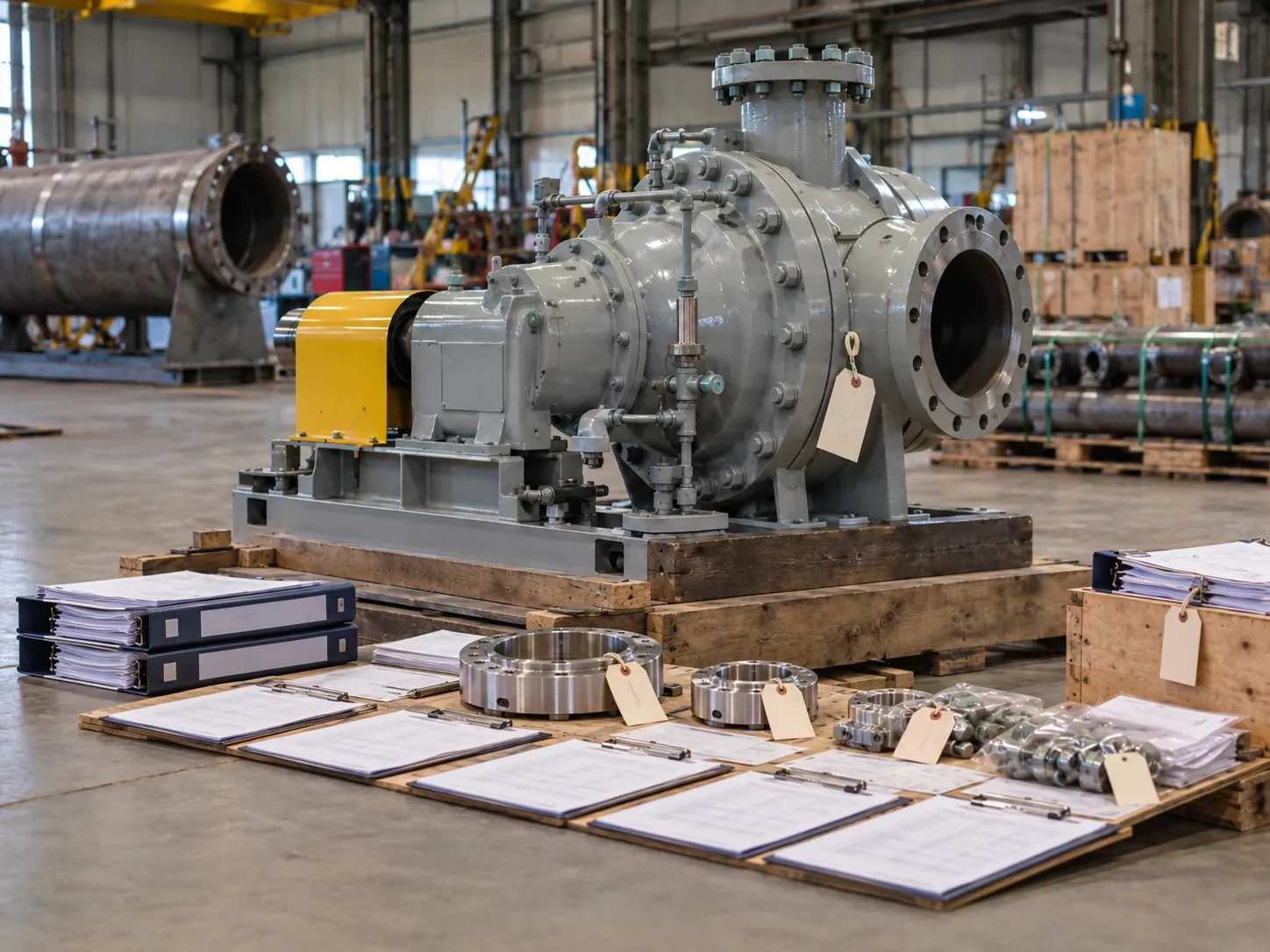
A price for a unit, on a day, from a named source.
Market-intelligence records retain what was published or observed together with the source. They do not store the organisation's confidential purchase price or calculate an implied market average from internal transactions.
- Each observation carries its commodity, unit, date and source
- Article state tracked from draft through published to archived
- Category risk and category reviews held beside the intelligence
No emergency read path
A sealed bid is protected by layered defences and there is no administrative route to read it early. Opening is a formal, recorded act with a time and a person attached.
One identity, isolated relationships
A supplier has one global identity across the platform and a separate, isolated relationship with each customer. One customer cannot see another’s qualification, scoring or standing.
Money held exactly
Amounts are stored as exact decimals with an ISO currency code, never as floating point. A total in one currency is never silently converted into another.
Conditions are rows, not flags
A supplier cannot move to conditional approval until at least one condition is recorded, because the state machine reads the rows rather than trusting a flag.

Capital projects, where the long-lead item decides the date.
Procurement directors, category managers, buyers and expeditors on oil and gas, liquefied natural gas, mining and infrastructure projects. What makes this procurement rather than purchasing is that a single package can move the completion date, and everybody knows which one.
- Long-lead items identified in planning, not discovered in expediting
- Consolidation opportunities across packages
- Inspection and non-conformance before acceptance
More of what the application covers.
- Commodity taxonomy defined by the organisation
- Long-lead items identified in planning rather than discovered later
- Consolidation opportunities across packages
- Category strategy, category risk and category reviews
- Framework agreements with their own register
- Expediting, delays and supplier updates against the order
- Inspection and non-conformance before acceptance
- Scorecards, reviews and improvement programmes
The transaction, beside assurance and contract.
- CVMSCVMS: Contractor / Vendor Management SystemCVMS governs contractor and vendor compliance and assurance; PMS transacts with the suppliers CVMS qualifies.
- CMSCMS: Contracts Management SystemCMS governs the contract created by an award, including its obligations, administration and certification.
- LGMSLGMS: Logistics Management SystemLGMS governs the movement of purchased goods; PMS governs sourcing, award and commercial acceptance.
- OMSOMS: Obsolescence Management SystemOMS governs obsolescence and lifetime-buy decisions that may result in a procurement requirement.
See PMS with one of your tender packages.
Bring one package and its bidder list. We will show the sealed submission, the recorded act of opening, the evaluation it supports and the supplier states behind each bidder.